Single Sign-On (SSO) & Two-Factor Authentication (2FA)

Secure access to the r2c platform with enterprise authentication

Single Sign-On (SSO) & Two-Factor Authentication (2FA)
Protect your organisation with secure, centralised access to the r2c platform.

r2c now supports Single Sign-On (SSO) and Two-Factor Authentication (2FA), helping organisations improve security, simplify user access, and meet internal IT security policies.

Whether you’re managing a small fleet or a nationwide operation, these security features make it easier to control who has access to your r2c environment while reducing the risks associated with password-only authentication.

What is Single Sign-On (SSO)?

Single Sign-On allows users to sign in to r2c using their existing corporate account, rather than remembering another username and password.

Instead of managing separate credentials for every application, users authenticate through your organisation’s identity provider.

Once signed in, authorised users can securely access r2c without maintaining an additional password.

Benefits of Single Sign-On

  • Simplify user access
  • Users log in using their existing company credentials, making access quicker and easier.

  • Improve security
  • Passwords remain managed within your organisation’s identity platform, helping reduce the risk of weak or reused passwords.

  • Centralise user management
  • IT teams can manage user access from one place, making onboarding and offboarding simpler.

  • Reduce support requests
  • Fewer passwords mean fewer password reset requests and less administration.

  • Support corporate security policies
  • SSO helps organisations align r2c with existing authentication and access management policies.
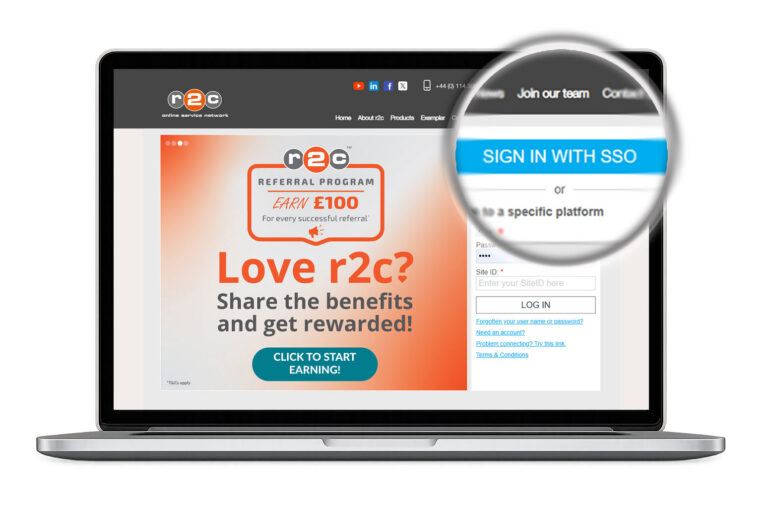
A Laptop showing r2c fleet & workshop management software and logging in via Single Sign-On (SSO)

What is Two-Factor Authentication (2FA)?

Two-Factor Authentication adds an additional layer of protection when users sign into r2c.

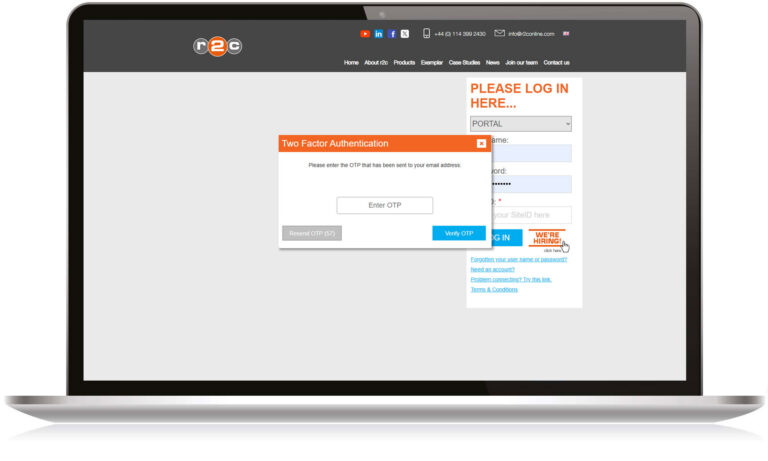
After entering their username and password, users verify their identity using a second authentication method.

Even if a password is compromised, unauthorised users cannot access your account without the second verification step.

Benefits of Two-Factor Authentication

  • Protect against compromised passwords
  • A stolen password alone is no longer enough to gain access.

  • Improve account security
  • Additional verification significantly reduces the risk of unauthorised access.

  • Increase customer confidence
  • Protecting sensitive fleet and workshop data helps support good cybersecurity practices across your organisation.

  • Support security compliance
  • Many organisations now require multi-factor authentication as part of their cybersecurity standards.
Other features

Centralised access control

Manage user authentication through your existing identity provider, making it easier to control who can access r2c across your organisation.

Guided implementation

Our team works with your IT department to configure, test and deploy SSO and 2FA, ensuring a smooth and secure rollout.

Flexible user provisioning

Enable secure access for new starters and remove access quickly when users leave, helping keep your organisation secure and up to date.

Enterprise-ready security

Designed to support organisations with robust IT security requirements, helping you align r2c with your existing authentication and access policies.

Why organisations choose SSO and 2FA

As organisations become increasingly connected, protecting access to business systems is more important than ever.

Single Sign-On and Two-Factor Authentication help organisations:
Enterprise-Grade Protection

Protect your organisation with modern authentication methods that help reduce unauthorised access and strengthen account security across your r2c platform.

Improve User Experience

Allow users to sign in with their existing company credentials, reducing password fatigue and making access to r2c quicker and easier.

Centralised User Management

Manage user accounts through your existing identity provider, making onboarding, role changes and offboarding simpler for your IT team.

Reduced IT Administration

Fewer passwords mean fewer password reset requests, helping reduce support calls and administrative overhead.

Stronger Compliance

Support your organisation's cybersecurity policies by implementing secure authentication methods that align with modern IT security standards.

Trusted implementation

Our team works alongside your IT department throughout the implementation process, ensuring your Single Sign-On and Two-Factor Authentication are configured securely and correctly from day one.

Solutions Selector

  • How implementation works
  • Supported environments

How implementation works

Every organisation has different security policies and identity management requirements.

For this reason, enabling SSO and 2FA requires configuration by both your IT team and the r2c implementation team.

A typical implementation includes:

  1. Initial discussion with your IT team
  2. Configuration of your identity provider
  3. Secure connection to the r2c platform
  4. Testing with selected users
  5. Rollout across your organisation

Our team works closely with your IT department throughout the process to ensure everything is configured correctly before users begin using the new authentication method.

Workshop manager using workshop management software in a commercial vehicle workshop.

Supported environments

r2c is designed to integrate with modern enterprise authentication platforms.

If you’re considering implementing Single Sign-On, our team will discuss your existing identity management solution during the planning process to confirm compatibility.

FAQS

SSO & 2FA FAQs

This depends on how your organisation chooses to configure access. Our implementation team will discuss the available options with you.
Trusted by Fleet Operators and Workshops Across the UK

Talk to us about secure, centralised access your r2c platform

If you’re looking to strengthen security, simplify user access, or align r2c with your organisation’s authentication policies, we’d be happy to help. Contact our team to discuss enabling Single Sign-On or Two-Factor Authentication for your organisation.